Monday, 27 June 2016

Exiting the EU and migration

There is no hiding it, migration to the UK has been a big issue in the recent referendum. The UK has experienced inward migration over thousands of years. With world population growth and the effects of Britain’s empire the UK has experienced various periods of inward migration since World War II. In recent years there has been a fragmentation in the Conservative Party on immigration issues. Over and above this, UKIP has become a stronger influence in politics. All of this has led to a negative attitude towards immigrants and what some British people call ‘foreigners.’ 

The problems of the war in Syria and the mass migration of its victims have brought an added strain to the wealthy countries of Europe and on the EU. Is that a reason for destroying the EU? I think not. It is even more reason for the countries of Europe to work more closely together and tackle the problems outside its borders. Sadly, by a small margin, the people of the UK have chosen to ignore these challenges , but they won’t go away.

Misinformation in the UK EU Referendum campaigning
There has been much misinformation banded around about the effect of migration on the UK, especially where that migration is coming from. There has been an assumption in the information put out by the Brexit campaign that by leaving the EU we will somehow solve the immigration ‘crisis’ as they put it. 

Yes, net migration to the UK is high, and in the last year (updated including Q1 2016), the Office for National Statistics (ONS) reported that net migration to UK reached record 335,600. The UK Financial Times reports that this is the highest level since the early 1990s:

click image to got to the FT graph


Migration from outside the EU is 50% of the total
It appears that the Brexit campaigners did not explain to the public in the EU referendum campaign that the actual number of migrants coming from the EU is about 50% of this total:


The above figures are for 2015 , and they show:

EU Migrants EU
184,000
Non-EU migrants
188,000
Subtotal
372,000
Less British emigration
-39,000
Net  total figures as of December 2015
333,000

The Brexiters have instilled fear in people’s minds in the UK that hordes of people are migrating from eastern European countries such as Bulgaria and Romania. So far, the figures do not support this. The two countries that UKIP were most concerned about were Bulgaria and Romania. However they do not show up as the highest number of migrants to the UK. They come under the 'EU2' classification in the above table and make up 58,000 of the total EU migrants in 2015. 

Brexiters have no 'solution' for immigrants from outside the EU
With the UK, leaving the EU it has been assumed that the EU migration of 184,000 will cease. Perhaps the UK government will operate a work permit system for those people from Europe. We will have to wait and see. However, no one has put forward a solution as to how the 188,000 people from outside the EU will be prevented from coming here. As the office of National statistics mention in their latest report -many of these people do not arrive in the UK from the EU overland in Europe, but arrive by air from destinations in the Far East and Africa and North America.  Click here to go to the ONS report

UK unemployment is low
A fear has been installed in the minds of many people in the UK that immigrants are coming to the UK and not working and just claiming benefits. This claim does not seem to be borne out by the facts of the matter. The UK has currently about 5% unemployment overall. If the migrants coming here over the years were just simply here to claim benefits this figure would be much higher. Here is an ONS summary of the situation:


Ignoring the world problem
All this upset in Europe and for the UK has been mainly caused by the issue of migration, but it isn’t going to go away by the UK bringing up the drawbridge on Europe. World population is on the rise exponentially and one of the effects of population increase is that people will migrate to the safest, the most stable and the most economically beneficial country to ensure that they and their family survive. This has been so all through history and in the case of the UK. It’s been going on ever since the Beaker people came to the UK over 4000 years ago!

The current world population of 7.3 billion is expected to reach 8.5 billion by 2030, 9.7 billion in 2050 and 11.2 billion in 2100, according to a new UN DESA report, “World Population Prospects: The 2015 Revision.”


We can't just ignore this fact. The UK can't separate itself off from the rest of the world's problems. One way or the other, they will affect us. It is my belief that the UK should be outward looking and join with other nations and attempt to tackle the problems so that there is a future for our children and grandchildren. 


In 2011, David Attenborough gave a lecture to the Royal Society in London. I paraphrase his comments about world population growth. He said that 50 years ago the world population was about 3 billion and today it has risen to 7 billion. I recommend watching all of his talk but if you only have a few minutes to spare see the short section from 6 min 10 sec in. See: http://www.populationmatters.org/attenborough-talk/  or click the link to YouTube below: 


So where do we go from here?
I hope the UK politicians will stop giving out misinformation and will work with other leaders in Europe and globally to end warfare, terrorism and strife, and at the same time begin to build safe and economically stable countries whilst tackling the world population crisis. If we don't do this, the problems of migration will increase and the pressure on first world countries will just become greater and greater.  


Monday, 4 January 2016

Will we ever get a fair voting system?

Here in the UK we are in the first year of a 5 year parliament where the Conservative Party have an overall majority of seats in the House of Commons but that is only because (for the UK Parliament) we have a 'first passed the post' constituency voting system. In this system the way people vote is not reflected in the number of seats in Parliament. For instance, the Conservatives increased their share of the vote by only 0.8% but gained an extra 24 seats. Labour increased their share by nearly double, 1.5%,  but actually lost 26 seats! A crazy system! For more see: the BBC General Election Results 
In fact by a large majority most of the people in the UK did not vote for the Conservatives, who got just over 11 million votes, whereas votes for other parties amounted to 19 million!


Sadly though, we are now beset with a 5 year period of Conservative style legislation despite the huge majority of people NOT voting for the Conservatives. We are having to endure a 5 year programme where the Conservatives impose their version economics (Osbourne’s budgets), their nuclear energy programme, and their relaxation of the human rights legislation, planning laws, climate change legislation and much more!  

http://electoral-reform.org.uk/

If you think that the voting system should change please join the Electoral Reform Society and/or support their campaigns via:
Twitter: https://twitter.com/electoralreform and Facebook: https://www.facebook.com/electoralreformsociety


Or support #FairVotesNow on www.change.org


Sunday, 22 November 2015

EU - Future Options


The UK Government should be negotiating the best terms for the UK from within the EU, not causing divisions in our country by wasting a lot of time arguing the case for 'in' or 'out'. 


The Africa - EU Partnership
- a dialogue & programme
The UK government should be using it's ministerial efforts to tackle the major international issues caused by the conflict in Syria and by the terrorism in Africa. 

The EU members need to work together and with other countries to better manage the migrant crisis. 

Nations need to work together to bring peace to Syria.
More work needs to be undertaken following on from the summit held in Malta on the migration crisis.


However, we are where we are so let us try and bring some clear thinking to the issue. Here are 2 articles - one by the Financial Times & the other by Investment managers, Hargreaves Lansdown and a summary of scenarios for the UK if they leave the EU: 


The fatal flaw in the case for Brexit


Brexit - What could an EU exit mean for your investments?


Extracts from the the HL article: 

Brexit scenarios

It is often assumed that in the event of Brexit, the UK could choose to be like Norway, Switzerland or Turkey; in Europe but not in the EU. However, these countries have never been in the EU - there is no historical precedent for a country leaving.
European Economic Area
The Norway option. The EEA is a free trade area comprising the EU, Norway, Lichtenstein and Iceland.
Pros: Direct contribution to the EU would fall by around 17%. 
Cons: UK would still be subject to EU regulations but would lose its seat at the negotiating table.
European Free Trade Association
The Switzerland option. As above but EFTA also includes Switzerland. 
Pros: not subject to EU regulations, budget contribution falls by c.60%. 
Cons: would need to negotiate bilateral agreements to access the single market in specific sectors.
Customs union
The Turkey option.
Pros: retain some benefits of membership, mostly with respect to trade in goods.
Cons: outside the single market, with a very severe impact on services sector.
There are many other options – the UK could set up its own free trade agreements with the EU and other nations, or simply rely on the World Trade Organisation’s ‘most favoured nation’ status, under which it would be free to set its own terms of trade.

Cost of membership? 

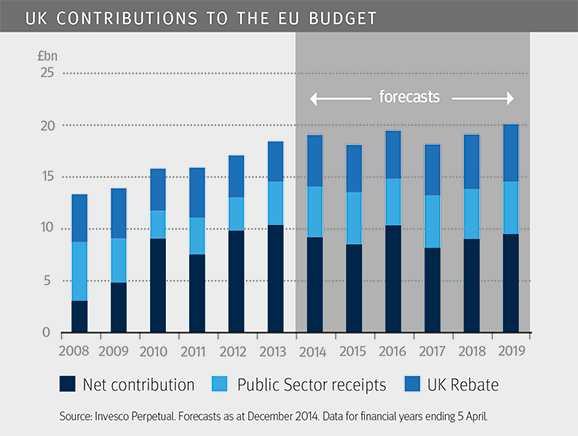
The cost of membership is one argument for leaving the EU but would the UK loose out on some of the benefits which the CBI estimate to be between  £62bn and £78bn annually. Click on this image to go to the HL article: 

Wednesday, 19 November 2014

NHS Privatisation

I wonder how many people know that all GP/doctor's surgeries in England are not part of the NHS - GPs are contractors to the NHS and have been so since the the formation of the NHS. 

Likewise, surgeons, anesthetists, gynecologists and many more are contractors to the NHS, most of them also contracting to private hospitals etc. So let us take a REAL look at privatisation of the NHS and not just one aspect. 

Thursday, 4 September 2014

Misconceptions about the benefits of Scottish Independence

Six  misconceptions that have not been addressed by the Scottish First Minister: 

Trident - One person said to me that independence would get rid of Trident. If there is a Yes vote it might be just moved further south and then you still have Trident within these small islands!  


Scotland has lion's share of money now! - Some people have said they want to increase spending on  health, education and welfare – the Scottish government has had pretty generous spending freedom over these areas for the last 10 years. In fact under the ‘Barnett’ system of allocating monies to parts of the UK,  Scotland has been getting nearly 20% (per head of population) more than England to spend in these areas. The 20% bonus that Scotland has been benefitting from for 10 years will be lost if the Yes Vote get their way! How will they make up the difference? 

Democratic Representation - Some say they don't have representation in the UK Parliament, - well actually there are 59 MPs sitting for Scotland. 

Opening up divisions  - The vote on the 18th Sept will now become a divisive issue within Scotland and between Scotland and England. It won't just end after the vote on the 18th is over. If the vote comes out in favour of no independence those who want independence will continue to agitate and possibly in a more extreme way. We have already seen the Yes campaign being somewhat less than civil at meetings being held by the No campaign. As for the the people in England, Wales and Northern Ireland, they haven't been alerted to the more serious issues of Scottish independence and the costs that they will have to bear for separating the two countries. If there is a yes vote in Scotland all of the financial problems caused by the splitting of two economies will start to appear and then the people in the rest of the UK will begin to realise the cost to them and this will be another divisive issue.  

Crazy Voting System - This vote is being decided on a simple majority – that means to say if 50.01% decide on a yes then the whole of Scotland goes down the road of independence even though nearly 50% didn't want it. Either side are not going to be happy if they are 'pipped at the post'. This type of referendum ought to be on a two thirds majority so that one can undeniably say what the overwhelming majority of people want. 


Oil Money - What would happen if Mr Alex Salmond's calculations on oil revenue are proven to be wrong. It will be too late then and then the 2.45 million working people in Scotland will have to pick up the tab!


I have written my views up on my blog, see: 


Do we need more national boundaries dividing up this little island?


Sunday, 31 August 2014

Do we need more national boundaries dividing up this little island?

Here are observations on Scottish Independence from an ordinary fellow who lives in England but who comes from a multinational background and whose wife is half Scottish.  Please explore there links and let me have your views:  

Peace, democracy, strong economy +  cultural & historical heritage development rather more national borders
Is independence really worth it? Perhaps Scotland should be more outward looking and concentrate on improving the economy and creating a better future for our children.

Scotland has wide-ranging financial spending freedom now!
Does Scotland need independence to achieve a better future for people who live in Scotland? There are doubtful benefits to independence and many potential major catastrophes including the issues surrounding oil prices and oil extraction in the North Sea. Here,  I try and put the facts and signal some of the dangers.


An historical view on Scottish independence
Why did I write this? Because I remember Winston Churchill's words (and many others who have the same sentiment): “Those who fail to learn from history are doomed to repeat it” 


PS: 
If I were to be cynical I could say: perhaps some of the leaders of the independence movement want to strut the world stage like kings of old? 

Scotland has wide-ranging financial spending freedom now!

Despite the rhetoric in the Yes/No campaign the Scottish Government has been able to spend what they like on a whole host of areas for the last 10 years so I really can’t understand why they’re saying that independence will allow them to spend more money on health education social work and housing etc. The Scottish government have also had tax-raising powers which they never used. Perhaps they’re frightened that this will lose them an election!

Perhaps the ‘feel good’ factor for Scotland’s government (free university places etc) in recent has been brought about by the formula which is used to calculate the amount of money the Scottish government has full control over. Scotland has a much larger allocation than England, – just over £10,000 per head, whilst England has about £8,500 per head.

For 10 year now, the Scottish Parliament has had full financial management over many areas, include:
  • Health
  • Education and training
  • Local government
  • Law, including most aspects of criminal and civil law, the prosecution system and the courts
  • Social work
  • Housing
  • Tourism and economic development
  • Some aspects of transport, including the Scottish road network, bus policy, and ports and harbours. (Capital expenditure on railway is still centrally funded).
  • Planning and the environment
  • Agriculture, forestry and fishing
  • Sport and the arts

· 

The UK Parliament control includes:
  • Constitutional matters
  • UK defence and national security
  • UK foreign policy
  • Immigration and nationality
  • UK economic and monetary policy (other than Scotland's tax-varying power)
  • Energy: electricity, coal, gas and nuclear power
  • Employment legislation
  • Social security payments  (the DWP - Department for Work and Pensions)
  • Some aspects of transport, including railways, safety and regulation
  • regulation of certain professions such as medicine and dentistry
In the UK Parliament Scotland has 59 MPs.  


Current Financial Facts
The main source of finance for the Scottish Parliament is still the block grant from the Treasury. This is worked out according to the 'Barnett Formula.' This allocation of money pays for all the spending programmes for Scotland, such as health and education. Because of the 'Barnet Formula', Scotland receives a proportionally greater share of the money available - more than the share received by England. About 19% more currently!  

The Scotland Act (2001), which drew up the conditions of devolution, granted the Scottish Government some tax raising powers  allowing Government to vary income tax by plus or minus 3%. This has never been used by the current SNP or the previous Labour administration in Edinburgh. Currently the block allocation shows that £10,152 per head is provided to the Scottish Government for spending on public services. This is £1,623 more than in England.  

The 2011 census shows that the population of Scotland is: 5.295 million so one can see the Scottish budget is a sizable at well over £50 billion.  

Future financing of an independent Scotland
If Scotland decides to become independent Scotland will have to raise its money from the number of people employed (part-time or full-time) which is about 2.547 million (2012 figures). They will also raise income on businesses and other things like North Sea oil.
The dilemma for Scottish government really relates to taxing businesses. They really can’t up the tax for working people very much as this might cause people to move their job from Scotland to England. The amount of money they can raise through inheritance tax and taxing rich people is tiny compared to what they can raise from businesses. However they have a dilemma – if they raise corporation tax too much businesses will just migrate south as many of them already have offices in England. If they raise taxes too high on the North Sea oil revenues then it might dissuade the big oil companies from investing in exploration. Therefore I believe they are between a rock and a hard place and they have three Achilles heels:

1.   North Sea oil revenues – if the world price of oil goes down then it makes extraction from the North Sea less attractive for the oil companies and therefore revenues will fall as the oil companies will go elsewhere.

2.   Recession – with all the turbulence in the world we could still have another recession. As we found in Iceland, Ireland and other small countries recession hits hard. If Scotland were independent they would not be able to call upon the extra borrowing power they would need internationally to sustain a fall in tax income.

3.   Currency – Alex Salmond doesn’t want to let a new Scottish currency float freely on the international markets as he secretly knows that this would lead to a heavy devaluation of the Scottish pound thus making all imports to Scotland massively expensive. It might make exports cheap but that won’t affect the North Sea oil which is based upon the international dollar rate. So Alex Salmond wants to link the Scottish pound to the UK pound and he says he can do it freely without asking us. Yes he can, but if they do this they will have to operate in a similar way to countries like Panama who have no international borrowing status and who rely solely upon holding massive reserves to protect their country. Without any formal agreement Scotland will not be able to borrow on international markets nor will it be able to operate independent banks.

So, the other option for Alex is to link the Scottish pound to the English pound in a currency union. Well, will the English want this? That means to say that if Scotland spends unwisely then the British government will have to pick up the tab. We have seen examples of the lack of controls but retaining the common currency in places like Greece. In the end Europe in the form of Germany has had to pick up the tab. I’m not so sure that the English taxpayer will want to pick up the tab for Alex Salmond’s spending in Scotland. 

The people of England haven’t had the opportunity to be asked as to whether they want to give free rein to Alex Salmond on the currency issue but I’m sure they would give a resounding no!

There are many other side-effects of Scotland becoming independent which I don’t think have been thought through by Alex Salmond and his colleagues. Who is going to pay for all of the Scottish embassies around the world? Will they come to the UK government, cap in hand, and say ‘please can we have a room in your embassy’? Is Scotland going to have a defence force? How are they going to fund it? How long will it take for Scotland’s application to join the EU take? Whether or not they join the EU they will have to do agree terms similar to those which countries like Norway have had to agree to which means that they have to comply with all the EU regulations and make the necessary payments to the EU without having a say at the Council of ministers or in the European Parliament.


My conclusion in all of this is that Scottish independence will not benefit the people of Scotland financially and may actually make them a lot poorer. Certainly it will cost English taxpayers who will have to bear the brunt of the cost of the decade or so it will take to unravel the departments of government and other organisations and will take up a lot of unnecessary parliamentary time to make sure the correct provisions are made when we should be concentrating on other more important world affairs and economic development for all of us.